 Thirtywell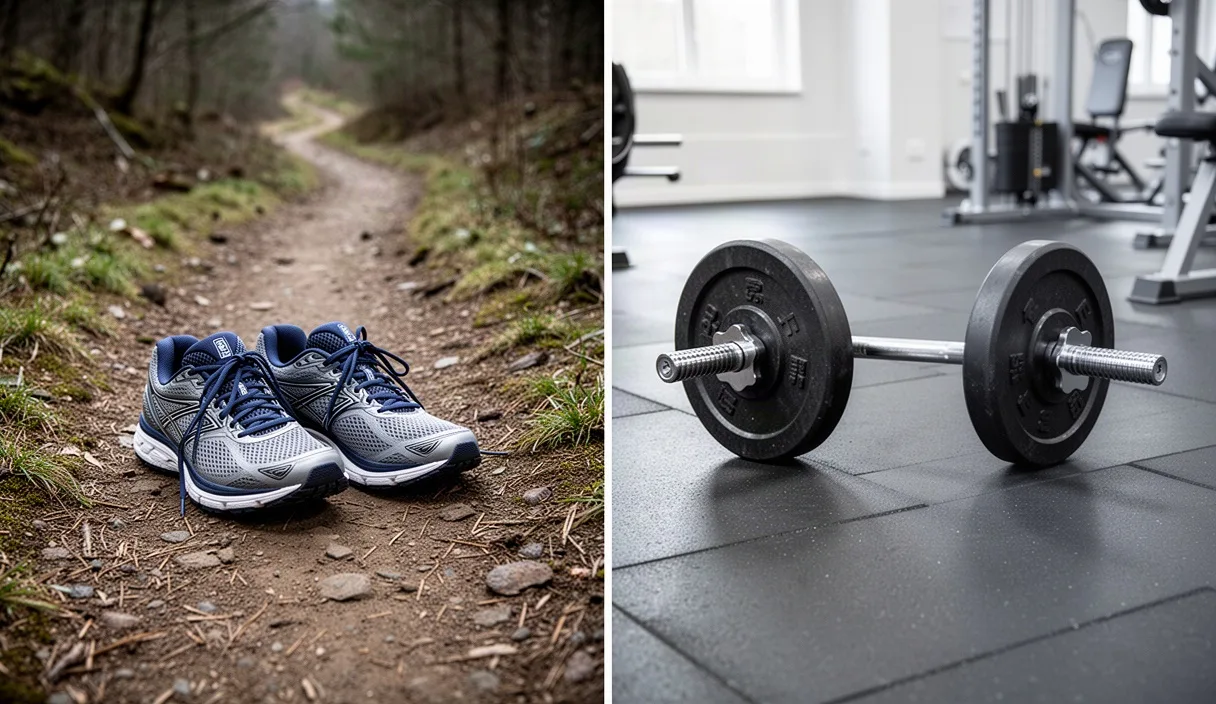
Somewhere around 32, the gym debate stops being about which activity burns more calories and starts being about which one you can actually fit between school drop-off, a full inbox and dinner at a reasonable hour. Running and lifting both work. Both get recommended by every trainer, every article, every well-meaning friend who just got into marathons or powerlifting. The real question after 30 is not which is objectively better, it is which one survives contact with your actual week.
This article breaks down the time cost, recovery demands, cardiovascular payoff and practical scheduling of both, so you can pick based on your life rather than on whatever worked for you at 24.
What Each Activity Actually Costs in Time
Running has a lower setup cost. Shoes, door, go. A 5K run takes most people between 25 and 35 minutes depending on pace, and there is no equipment to load, no rack to fight over, no warm-up sets to work through first. If you have a hard 30-minute window and nothing else, running fits it almost exactly.
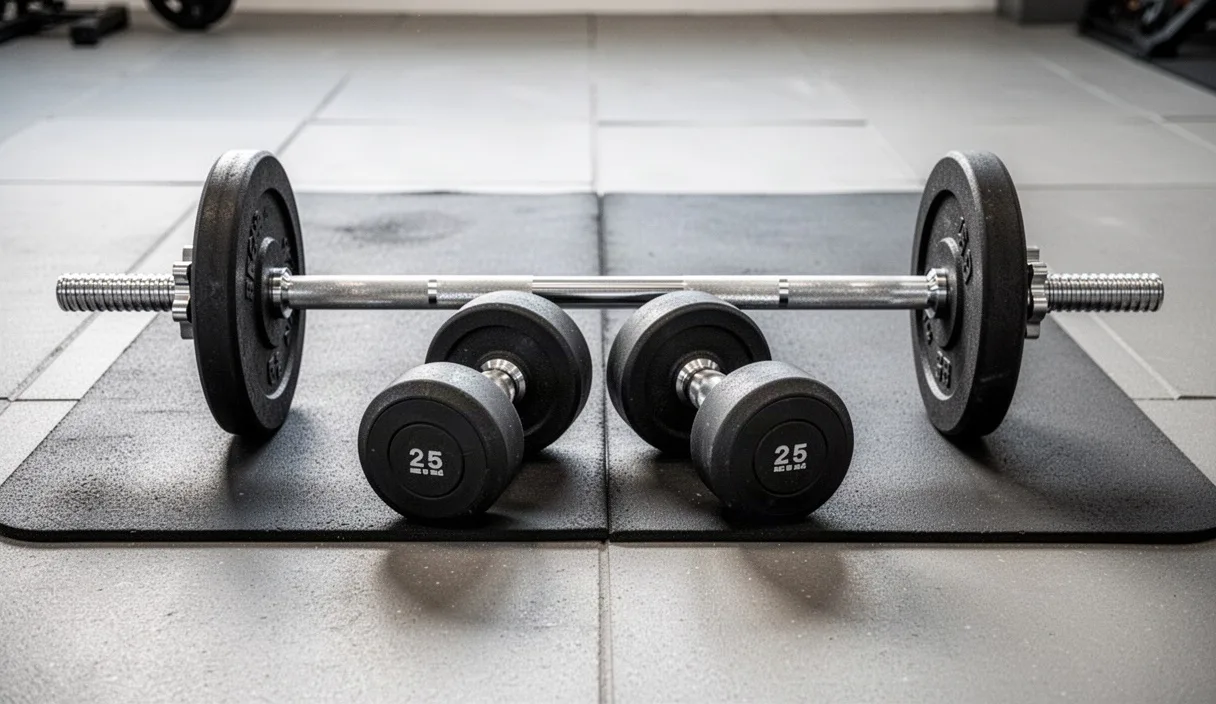
Lifting has a higher setup cost even before the first rep. A proper strength session usually needs 5 to 10 minutes of warm-up, then working sets with rest periods of 60 to 120 seconds between them. A four-exercise session with three sets each, plus rest, realistically runs 45 to 60 minutes if you want to lift with any intensity. Rushing rest periods to save time often means lifting lighter, which somewhat defeats the point.
There is also travel and commute time to consider, which people forget to count. Running from your front door costs zero commute minutes. Lifting at a commercial gym usually costs 10 to 20 minutes each way once you add parking and changing. A home setup with an adjustable bench and a set of dumbbells removes that cost, but the upfront investment is somewhere between 150 and 400 dollars depending on how much weight range you want.
- Running: 20 to 40 minutes, no travel if done from home, minimal gear.
- Lifting at a gym: 60 to 90 minutes including commute, warm-up and rest periods.
- Lifting at home: 40 to 55 minutes, no commute, but requires equipment already in place.
Recovery Demands: Joints vs Muscles
The two activities tax the body in different places, and that difference matters more after 30 than it did before. Running is repetitive impact. Each stride sends a force through the knees, ankles and hips roughly two to three times body weight, thousands of times per session. Joints and connective tissue recover more slowly than they did a decade earlier, which is why a lot of people who ran fine at 26 start dealing with cranky knees or shin soreness at 33 without changing their mileage at all.
Lifting concentrates its demand on muscle fibers and the nervous system rather than on joint impact, assuming the form is reasonable. Muscle soreness after a hard session typically peaks at 24 to 48 hours and eases within three to four days. The tradeoff is that lifting the same muscle group again before it has recovered tends to blunt progress and raise injury risk, so spacing matters. A common approach is to leave 48 hours between sessions that hit the same muscle group hard.
Neither pattern is automatically safer. A runner who ignores nagging knee pain and a lifter who ignores a tweaked lower back are both heading toward the same outcome: a forced break. If pain lasts more than a few days, gets worse rather than better, or shows up as sharp rather than dull, that is a signal to see a physical therapist or sports medicine doctor rather than pushing through on the theory that it will work itself out.
One practical difference worth noting: running recovery is largely passive, you just need to let tissue rebuild, while lifting recovery benefits from protein intake and sleep quality in a more direct way. Adults over 30 doing regular resistance work generally need somewhere around 1.2 to 1.6 grams of protein per kilogram of bodyweight daily to support muscle repair, though anyone with kidney issues or other conditions should check that number with a doctor first.
Cardiovascular Benefits Side by Side
Running is the more direct route to cardiovascular endurance. It trains the heart and lungs at sustained moderate-to-high effort for the duration of the run, which is exactly the stimulus most cardio guidelines are built around. Thirty minutes of running at a conversational-but-labored pace sits comfortably in the moderate-intensity zone that health organizations reference when they talk about weekly activity targets.
Lifting still raises heart rate, particularly during compound lifts like squats and deadlifts or when sets are done with short rest periods, but the effect is more intermittent. Heart rate spikes during a set, then drops during rest, rather than staying elevated continuously. Circuit-style lifting with 30 to 45 seconds of rest closes some of that gap, but a traditional strength session with 90-second rests is not doing the same cardiovascular job as a run.
Here is a rough side-by-side for a 30-minute session of each, using average effort levels:
| Metric | Running (30 min, moderate pace) | Lifting (30 min, standard rest) |
|---|---|---|
| Average heart rate elevation | Sustained, moderate to high | Intermittent spikes, moderate |
| Estimated calories (70kg adult) | 280 to 350 | 150 to 220 |
| Joint impact | High, repetitive | Low to moderate |
| Muscle strength gain | Minimal | Primary benefit |
The numbers above are rough estimates, not lab measurements, and vary by body weight, effort and individual fitness. The takeaway isn't that one wins, it is that they train different systems, which is exactly why so many trainers eventually recommend some mix of both rather than picking a permanent side.
Which One Fits a 30-Minute Window
If the entire available slot is 30 minutes, door to door, running usually wins on pure logistics. There is no warm-up debt to pay off and no equipment to secure. A 30-minute run, even at an easy pace, is a complete session with a real cardiovascular benefit.
Lifting can still work in 30 minutes, but it has to be restructured. Full-body sessions using supersets, where you alternate between two exercises with little to no rest, can compress a normally 50-minute session into 30 without gutting the volume too badly. An example: pair goblet squats with push-ups, then Romanian deadlifts with rows, doing three rounds of each pair with 60 to 90 seconds between rounds rather than between every single set.
What doesn't fit well into 30 minutes is a traditional heavy lifting split with long rest periods, five exercises and a proper warm-up. Trying to cram that into half an hour usually means cutting rest short, which either compromises the lift or raises injury risk on heavier movements like squats and deadlifts. If 30 minutes is the hard ceiling most days, that is useful information for deciding which approach to build the week around.
Combining Both Without Burning Out
Most people don't actually need to choose permanently. The more common failure mode after 30 is trying to do both at full intensity every week and ending up too fatigued to do either well. A more sustainable pattern separates the two by intent rather than cramming them into the same days at the same effort.
A workable weekly structure for someone with three to four available session slots:
- Two lifting sessions of 40 to 50 minutes, focused on compound movements, spaced at least 48 hours apart.
- One or two runs of 20 to 35 minutes, placed on the days between lifting sessions rather than immediately before or after a heavy leg day.
- One full rest day, genuinely off, no bargaining.
The scheduling detail that trips people up most is stacking a hard run the day before or after a heavy lower-body lifting session. Legs that are still sore from squats don't run well, and a hard run the day before deadlifts can leave hips and hamstrings pre-fatigued in a way that raises injury risk on the lift. Spacing leg-heavy lifting and running by at least a day apart tends to solve most of that friction.
Anyone returning to exercise after a long break, managing an existing joint issue, or dealing with a chronic condition like cardiovascular wellness should run a combined plan like this past a doctor or physical therapist before starting, since individual limits vary more than generic weekly templates account for.
Making the Choice Based on Your Week
Common mistakes usually show up in the planning stage rather than mid-workout. A few worth naming directly:
- Picking the "better" activity instead of the realistic one. A perfect lifting plan that gets skipped three weeks out of four does less than an average running habit that actually happens.
- Ignoring commute time when comparing options. A gym session that looks like 45 minutes on paper often eats 70 minutes of actual clock time.
- Running through joint pain because "it's just running." Persistent ankle, knee or hip pain that doesn't ease after a few rest days deserves a professional look, not just lighter shoes.
- Lifting heavy without a warm-up to save five minutes. That's usually where strains happen, particularly in the lower back and shoulders.
- Scheduling both activities hard on back-to-back days without checking how the muscle groups overlap. Leg day followed by a tempo run is a recipe for a mediocre version of both.
Start by mapping your actual available time slots for a real week, not an ideal one. If most days give you 25 to 35 minutes, lean toward running or superset-style lifting rather than a traditional split. If two or three days give you a genuine 45 to 60 minutes, lifting becomes fully workable and can be paired with shorter runs on the lighter days. Try one structure for four weeks, track how many sessions actually happened versus how many were planned, and adjust based on that number rather than on which activity sounds more virtuous. The version of this plan that survives your calendar is the one worth keeping.